
Advocacy for Immigrant and Refugee Health Needs
Key points
- Advocacy can take place at different levels and with different targets. It can include:
- case advocacy (for individual children/youth),
- systems advocacy (for practice changes that affect many children/youth), and
- policy advocacy (for changing legislation or regulations).
- Impactful advocacy involves carefully documenting and defining the problem, proposing a solution, identifying an ‘audience’ or group that can implement the change you seek, and using evidence and storytelling to build support for your desired action.
- Children and youth new to Canada are a diverse group with a wide range of experiences, needs and strengths. A culturally sensitive approach to advocacy that engages them and prioritizes their goals is critical to success.
- It can be difficult for newcomers to access health care that is both culturally and language appropriate. Because of this service gap, clinicians often find themselves acting as patient advocates.
- Individual stories can be very effective at bringing about change. However, before engaging in any advocacy that could personally identify an individual or their family, it is essential to obtain permission and acknowledge any potential implications of going public with a story.
- Change can take time. It is important to review advocacy strategies regularly to measure progress and identify new opportunities or challenges.
Advocacy by health professionals
Advocacy – or action that supports or advances a person, group or issue – is a recognized role for paediatricians, family practitioners, nurses and other health care providers. Health care providers are respected voices within their communities and as such can be extremely impactful advocates. By virtue of their profession, knowledge and lived experiences, health professionals bring authority and expertise to any conversation related to health and well-being. As such, they can be powerful advocates for both their patients and the general population.
Advocacy can take place on multiple levels and with different objectives and audiences, including:
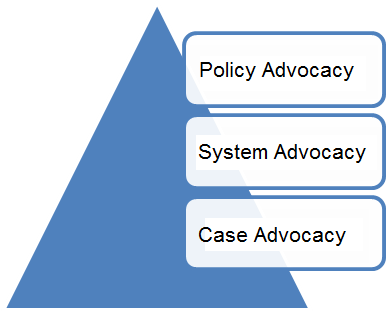
- Policy advocacy: calling for changes to policies, regulation and legislation that will benefit most or all children and youth new to Canada (e.g., access to healthcare for children of refugee parents awaiting review of their status).
- System advocacy: working to achieve practice changes that improve quality of life and development for several or many children and youth (e.g., ensuring access to culturally and language-appropriate developmental assessments).
- Case advocacy: speaking out on behalf of an individual patient to obtain resources and/or improve access to care (e.g., access to a needed medication for a refugee child).
Since 1922, the CPS has advocated for the health, safety and well-being of children and youth. The CPS is regularly called upon to provide expert advice on how legislation and programs can best meet the needs of children and youth. Recent advocacy initiatives and tools and resources to support member-driven advocacy can be found in the CPS’s Advocacy Centre.
Advocating for change: How is it done?
The steps for developing any advocacy strategy – whether case-based, systems or policy-oriented – are similar, and are described in Table 1.
Case advocacy
When engaging in case-based advocacy, here are some questions to help develop your strategy:
- What are the specific health issues you are advocating for? What does this child need? Gather information and evidence about immediate needs, the consequences of inaction, the short and long-term benefits of their need being met, and how this need would be met for a Canadian-born child.
- Is inequity or injustice contributing to a gap between this child and a Canadian-born child? If so, what action would close this gap and improve health equity?
- What options have already been explored? There may be allied individuals or organizations who can help you support this child’s needs.
- Who else can help address this child’s needs – at what level of government or where in the health system? The answer to this question will determine your target group or audience. If your first approach does not succeed, rethink the problem and who else might help address it. Could a pharmaceutical company supply a drug or medical device on compassionate grounds? Can a community organization help to bridge a gap in care?
- What are the time constraints? Does this problem require a rapid resolution for medical reasons, or is there flexibility? Make notes based on the evidence. Focus on specific changes that will mitigate the problem.
- Is there a “win-win” solution? Look for an outcome that both benefits the child for whom you are advocating for, as well as the broader population of newcomer children and their families.
- Is there a story that needs telling? Stories that personalize an issue are incredibly important for advocacy. You must obtain permission from the family to use their story, and ensure they approve of what you will be advocating for and what personal details will be shared. Make sure the family and the child or youth understand the implications of going forward with advocacy, especially if the request is made public. For example, explain that the media can be intrusive in seeking details about their personal life, and that sharing on social media can attract negative and unwanted commentary. Remember that effective storytelling does not necessarily need to include identifying details or names.
- Is there an opportunity or relationship to be leveraged? Use your network. Find opportunities to advocate in meetings you may already have scheduled, or meet with strategically connected people with whom you have worked before.
- Who may object and what will their objections likely be? Consider what individuals or groups in opposition may say in response to your advocacy and develop counterarguments and messages to address their concerns. Find points of agreement and use these as opportunities to collaborate and move forward.
- Will public advocacy help? Finally, ask yourself whether going public about this child’s story is likely to speed or slow resolution of the problem. Consider the pros and cons carefully and always ensure that anonymity has been maintained or appropriate permissions granted before making anything public. If you use mainstream or social media for public engagement, attention on the child or family might be uncomfortably intense, and they may not appreciate being in the spotlight. There may be negative commentary that you cannot control. In developing your plan for advocacy, consider seeking a professional’s advice or help with a public “call to action”. The public affairs staff at your local hospital may be able to guide next steps.
Systems advocacy
The process of engaging in individual case advocacy often uncovers a wider problem that may warrant a systems advocacy approach. Examples of practice-based improvements could include establishing a special clinic for refugee children and youth or setting a practice standard for the use of interpretation services. Typically, this approach takes longer than obtaining support for an individual child’s health needs. While the basic elements for developing a plan are the same as for case advocacy (see Table 1), there are wider themes to keep in mind:
- Defining the problem is key: Outline a specific request or need. Be aware that any “ask” will likely come up against unanticipated challenges, and therefore may need to grow or adapt as you consider the range of issues involved. It is important to anticipate some of these complexities without becoming so overwhelmed that you do not start advocating in the first place. Keep the initial problem as simple and well-defined as possible and address new issues as they arise.
- Determining who can change the system may require some research: There is probably more than one target for systems advocacy. You may need to rank potential agents of change and coordinate efforts to involve more than one group or stakeholder.
- Understand the size of the problem: Determine how many immigrant and refugee children need access to this service and what will the immediate costs and long-term savings will be of meeting this need.
- Make sure your solution is realistic: Your proposed solution must be feasible given existing resources, be acceptable to the group you are advocating on behalf of, and be achievable by those to whom you are advocating. An approach that was useful for single-case advocacy may not be appropriate for a larger patient population of immigrant and refugee children and youth.
- Do your research and plan for evaluation: With systems advocacy, more care must go into assessing the impact of proposed solutions, and the implications for cultural safety. Identification of best practices and outcome evaluation are both crucial. Having an evidence-based position statement or practice point from an organization like the Canadian Paediatric Society to support an advocacy position adds weight and credibility. Look for examples from other jurisdictions that may be applicable and explore involving academic or other non-governmental organizations as potential supporters, especially if they have published guidelines or statements.
- Tell the stories: Including stories of children and youth caught in an unresponsive system will humanize systems advocacy. While statistics and data are useful, personal stories are much more likely to resonate and motivate. Remember to obtain permission from families, to elevate the voices of the families themselves whenever possible, and to be mindful of potential pitfalls.
Policy advocacy
Changing policy, legislation and/or regulations can be more complex than advocating for systems change. An example of this level of advocacy could be calling for a new federal law covering the costs of urgently needed medical equipment for refugees until they are eligible for coverage by a provincial/territorial program. It is difficult for individuals to effect change at this level, so building a broad coalition of support and partnering with reputable organizations such as the Canadian Paediatric Society or Canadian Doctors for Refugee Care is key to effective policy advocacy.
While the basic principles of systems and policy advocacy are similar, efforts at the government level are often most effective when they reach a large group of decision makers and demonstrate significant public support. Politicians are elected to represent the interests of their constituents. If politicians frequently hear from their constituents that an issue is important to them, they are more likely to feel compelled to act. If your advocacy requires a change in legislation, it is essential to raise awareness and support across a broad base of elected representatives and identify champions who are willing to advance your issue in government.
Immigrant and refugee child health issues may not readily have the community support or awareness needed to pressure a government to effect change. Garnering broad support for an issue that is not necessarily “mainstream” is hard work. Both traditional and social media are important tools at this level, along with the linchpins noted above for case- and system-based advocacy: a clear statement of the problem, firm evidence, useful statistics, great stories that illustrate the problem, and a thoughtful resolution. In Canada, advocating on issues related to health and well-being can be complicated by jurisdictional considerations. Understanding whether an action or issue is within federal or provincial/territorial jurisdiction is very important when determining the most appropriate audience for your advocacy. On some issues you may need to advocate at both federal and provincial levels, with asks tailored to each government’s role and responsibilities.
Long-term results and follow-up
For any type of advocacy, success may not come easily or quickly. Strategies need to be reviewed, evaluated and updated. Ask the following questions at regular intervals or as political or other circumstances change:
- Are there new opportunities to leverage more support for a proposed solution? Is another solution more likely to be adopted at this time?
- Is this problem still pressing for a particular child (or group), or have circumstances changed?
- Have new or related issues emerged that require more immediate action?
- How has the political landscape changed? Can wider pressure be brought to bear on this issue? Are there new examples of best practice in Canada or elsewhere that could strengthen advocacy asks?
- Is there new evidence of harm because this issue remains unresolved?
- Are partners and collaborators still fully engaged on this issue?
To be truly effective, advocacy on behalf of immigrant and refugee children and youth needs to be carefully examined through the appropriate cultural lens. It is important to recognize the varied experiences of children and families with different backgrounds and migration journeys. Newcomer families should be as engaged as possible, upholding the fundamental principle of “nothing about us without us”.
Be mindful of the following when advocating for children and youth new to Canada:
11 Tips to Avoid Potential Pitfalls When Advocating for the Needs of Children and Youth Who Are New to Canada
- Choose the right advocacy tool for the health issue in question and prepare advocacy materials to fit.
- Remember that children and youth who are new to Canada are a diverse group with varied backgrounds, experiences and needs. A one-size-fits-all approach will not be effective. Collaborate with the people for whom you are advocating, ensuring you include and amplify their voices.
- Be sure the family or group understands the issue, what changes are being sought, and what methods will be used. Ensure this information is communicated in their first language and that the proposed approach and outcome are culturally sensitive.
- Have at least one well-rehearsed and knowledgeable spokesperson. If there is more than one spokesperson, ensure that everyone is delivering the same key messages. It may be beneficial to have spokespeople who can communicate in both official languages. Media training may be available through hospitals, universities or other institutions to strengthen confidence and skills advocating through the media.
- Be clear, concise and accurate. If you do not know the answer to a question, say so. It is an opportunity to find the answer and follow up.
- While it is important to advocate passionately, a confrontational approach can backfire. Finding a balance between advancing your cause and maintaining working relationships is important for long-term success. Remember that desired changes in policy or practice can still be made even when people have different motivations or points of view.
- When asking a group or family’s permission to share their story, be cognizant of their experience of trauma and ensure your request is trauma-informed. Clearly and carefully discuss the potential implications of going public, and should they decide to do so, be available to support them through challenging situations. Help prepare them for media intrusiveness and possible negative commentary.
- Be sure your advocacy materials are culturally sensitive and accurate by having them screened by members of the community whenever possible, as well as by those with subject matter and advocacy expertise.
- Prepare for pushback, negative commentary, or misinformation – especially if newcomer requirements are perceived to exceed the resources available to Canadian-born children and youth. Ensure that the legal immigration status and safety of a child, youth or newcomer family will not be jeopardized because of media attention or advocacy efforts.
- Remember that other priority populations in Canada have unmet health needs that may be similar or different. Be careful not to pit one group’s needs against another’s.
- Be sure that the motives of your partners and collaborators remain congruent with yours over time. Take time to restate the reasons for your involvement on a regular basis and watch for diverging agendas or conflicts of interest.
|
Table 1. Basic steps for developing an advocacy strategy |
|
|
Define the problem |
|
|
Determine objectives |
|
|
Gather information |
|
|
Define target audiences |
|
|
Develop key messages |
|
|
Define modes of engagement and presentation |
|
|
Identify allies and seek collaboration |
|
|
Evaluate outcome(s) and develop next steps as needed |
|
Selected resources
The Canadian Paediatric Society website has helpful advocacy tools for health professionals:
- Advocacy 101: Speaking out for child and youth health (free online module for CPS members)
- Agencies serving immigrants and refugees
- CPS advocacy:
- against changes to the Interim Federal Heal Program that will require co-payments for eligible prescription and supplemental health products and services as of May 2026.
- urging the Government of Canada to deliver on its commitment to create a regularization program that provides a path to citizenship for migrants living in Canada without valid documents.
- in support of expanding family-based temporary immigration measures for those seeking shelter and safety from conflict zones, and for targeted efforts to ensure access to essential medical services for refugees upon arrival in Canada.
- Joint advocacy initiative urging the Government of Ontario to ensure everyone living in Ontario has access to essential healthcare services independent of insurance status.
- The Refugees and Global Health eLearning website has a useful training module on the power of sharing newcomer stories.
- PedsCases Advocacy Podcast: Part 1, Part 2, Part 3
Reviewer(s)
Canadian Paediatric Society
Last updated: March, 2026